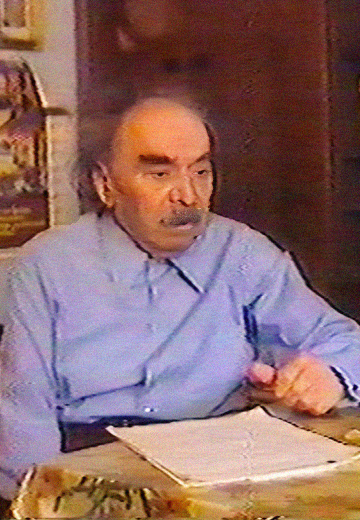
Writer Hryhoriy Nudga
1993, 59 min
Lviv Television, Literary and Dramatic Editorial Office. The June 26, 1993 issue of the "Autograph" program is dedicated to the writer Hryhoriy Nudga on the occasion of his 80th anniversary.
On the video: Hryhoriy Nudga's apartment, his books, photographs, a recording of an interview; Hryhoriy Nudga talks about studying Ukrainian culture; the studio, the poster for the 80th anniversary celebration, the anniversary, people in the hall - Roman Kudlyk, Andriy Sodomora, greetings from Ivan Denysiuk; documents indicating Nudga's Cossack origin, family photographs; the author's story about Taras Shevchenko's friend Hryhoriy Vashkevych, about working in archives, finding old books, working with sources, about the famine of 1932–1933 and his own activities and situation in the context of the Holodomor; journalist Anatoliy Nesterenko talks about Nudga's admission to Kharkiv University, reads material from the newspaper "Literary Ukraine"; recitation by the writer's granddaughter of her grandfather's favorite poems, which he read in Kolyma; memories of Hryhoriy Nudga's meeting with Maksym Rylsky; publication of Hryhoriy Nudga's works "Republic of Cossacks"; songs "A Cossack Traveled Beyond the Danube" interpreted by Beethoven and Ray Carroll ("Cossack Cha-cha-cha").
Comments: Doctor of Philology Mykola Ilnytsky; writer Rostyslav Bratun.
Journalists — Anatoliy Nesterenko, Mykola Petrenko.
Reference: Hryhoriy Antonovich Nudga - Ukrainian literary critic, folklorist and musicologist, researcher of literary and folklore relations and the history of Ukrainian song, candidate of philological sciences, honorary member of the National Theatre of Ukraine. His scientific achievements include fundamental works on genre and anthology, including the collection "Songs and Romances of Ukrainian Poets", the monographs "Parody in Ukrainian Literature" and "Ukrainian Ballad". Repressed in 1945 and a prisoner of the Gulag, after rehabilitation he worked in Lviv, but his scientific career remained limited despite international recognition.